
How Drones Actually Work: The Technology Behind Autonomous Flight
Drones have moved from hobbyist toys to serious professional tools faster than almost any other technology in recent memory. They are now used for package delivery, precision agriculture, infrastructure inspection, search and rescue, and military operations. Understanding how they actually work reveals a fascinating intersection of aerodynamics, electronics, and increasingly sophisticated software.
This post breaks down the technology inside a drone, how autonomous flight works, and where the most interesting developments in the field are happening right now.
The Basic Physics of How Drones Stay in the Air
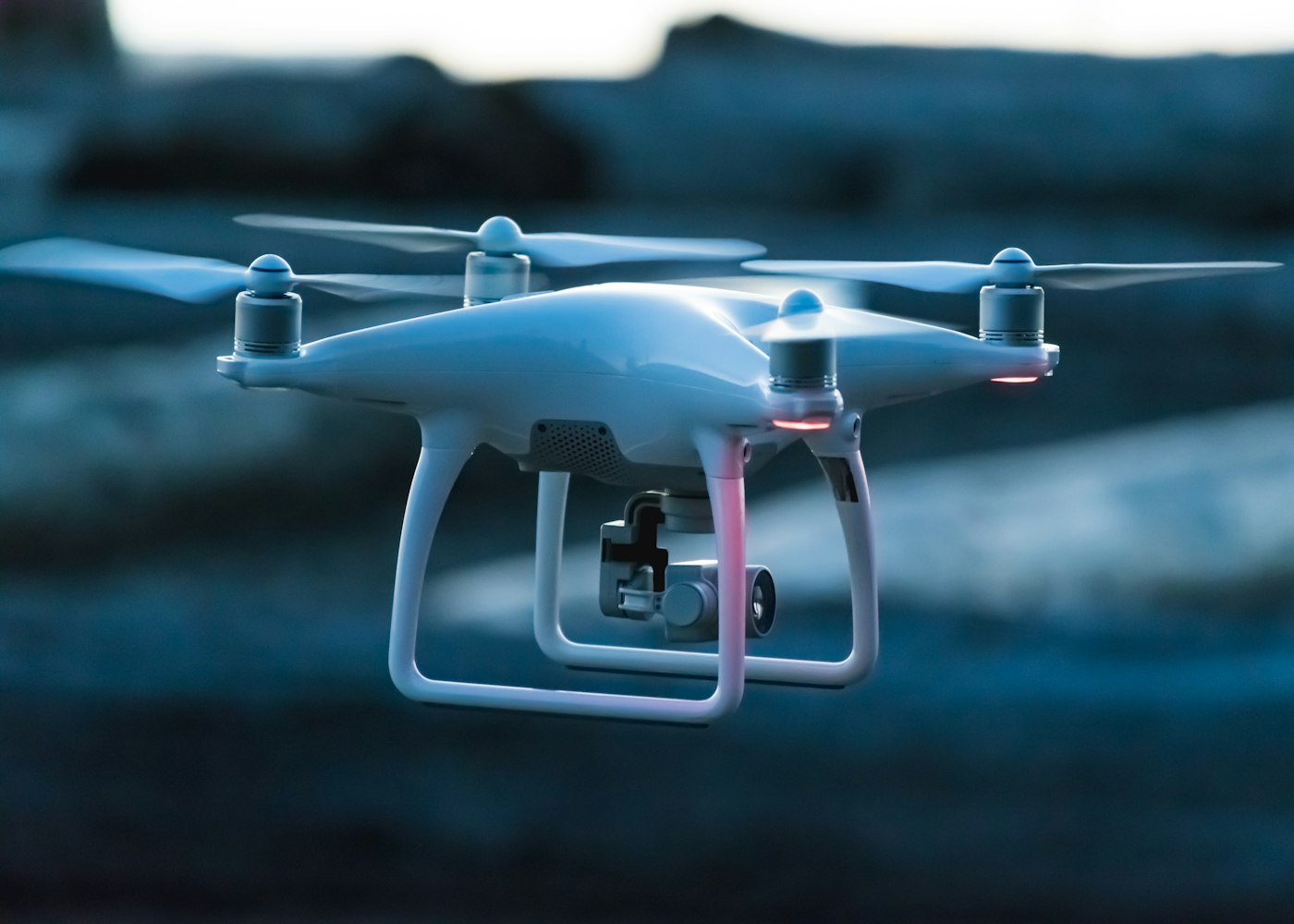
Most consumer and commercial drones are multirotors, meaning they use multiple spinning rotors to generate lift. A quadcopter uses four rotors arranged in a square. Each rotor spins at a precise speed, and by adjusting the relative speeds of different rotors, the flight controller can control altitude, pitch, roll, and yaw.
Unlike a helicopter which uses a complex mechanical system to vary blade pitch, multirotors achieve control purely by varying motor speeds. This simplicity is why they became dominant. Fewer mechanical parts means fewer failure modes and dramatically lower manufacturing costs.
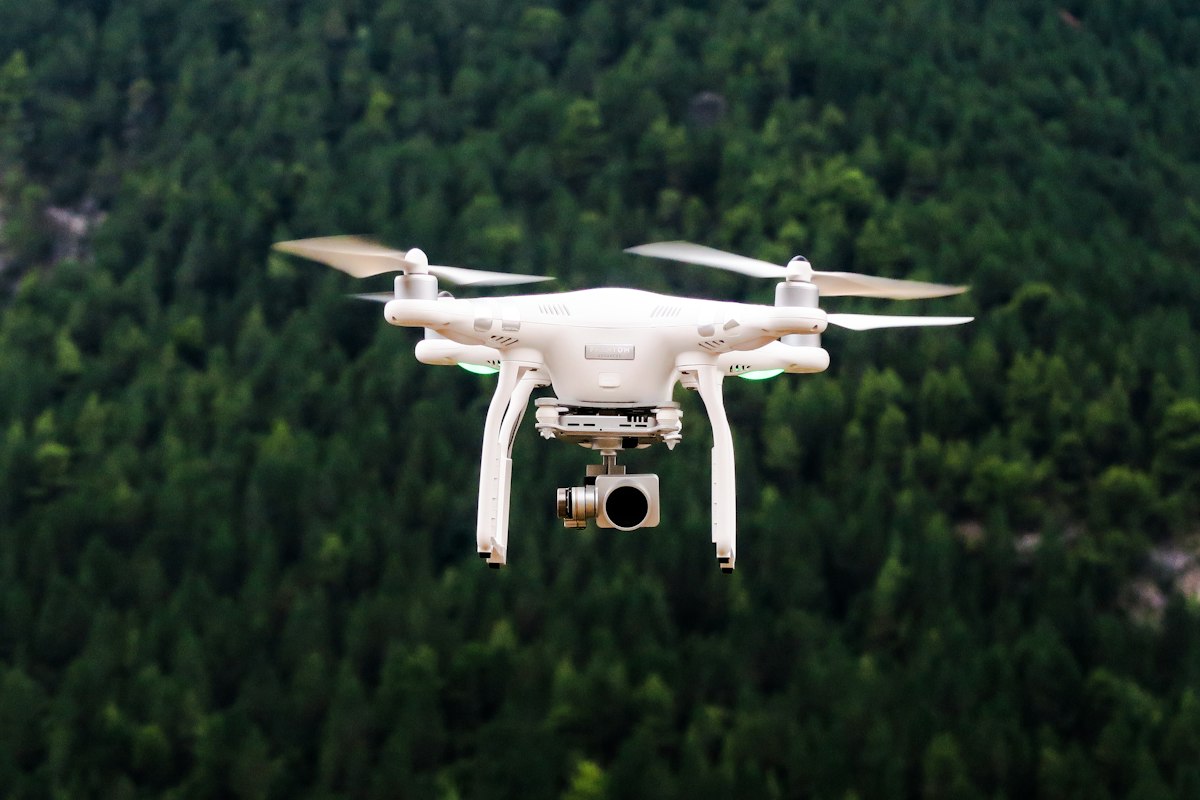
Modern flight controllers make thousands of micro-corrections per second to maintain stable flight
The Key Components Inside Every Drone
The brain of the drone. It reads data from all the sensors, runs the stabilization algorithms, and sends commands to the electronic speed controllers that drive each motor. A good flight controller runs its control loop hundreds of times per second. ArduPilot and PX4 are the dominant open-source flight controller firmware used in professional applications.
Combines accelerometers and gyroscopes to measure the drone's orientation, acceleration, and rotation rates in all three axes. This data is fed to the flight controller constantly. Without an accurate IMU, stable flight is impossible. High-end drones use multiple redundant IMUs so a single sensor failure does not cause a crash.
GPS provides position data for autonomous navigation and return-to-home functions. The barometer measures air pressure to maintain consistent altitude. GPS alone is not precise enough for many applications, which is why professional drones often use RTK GPS systems that achieve centimeter-level positioning accuracy.
One ESC per motor. It receives a throttle signal from the flight controller and drives the brushless motor at precisely the commanded speed. The speed of each motor determines whether the drone climbs, descends, tilts, or rotates. ESC response speed is critical for agility and stability.
Stereo cameras, ultrasonic sensors, lidar, and time-of-flight sensors give the drone awareness of its surroundings. Consumer drones use computer vision to detect and avoid obstacles automatically. Industrial drones combine multiple sensor types for reliable detection in varied lighting and weather conditions.
How Autonomous Flight Actually Works
When a drone flies autonomously along a planned route, the flight controller is constantly comparing the drone's current position and orientation from GPS and IMU data against the planned waypoints. The difference between where it is and where it should be generates an error signal, and the control algorithm computes the motor commands needed to reduce that error.
This process uses PID controllers, a classic control theory technique that accounts for the current error, the accumulated past error, and the rate of change of the error. Tuning these controllers for a specific drone airframe is a significant part of professional drone development.
Where AI Is Changing Autonomous Drones
Traditional waypoint-based autonomy works well in known, structured environments. AI-based approaches are extending this to dynamic and unstructured environments. Drones that can navigate through forests without GPS, identify and track moving objects, land precisely on moving platforms, or coordinate with swarms of other drones to cover large areas efficiently are all areas of active research and increasingly commercial deployment.
The drone industry is increasingly a software industry. Mission planning software, fleet management systems, computer vision pipelines for aerial imagery analysis, autonomous navigation algorithms, and the ground control software that operators use to monitor and direct drone operations are all software engineering problems. Developers who understand both software and the basics of flight systems are genuinely in demand in this space.
Drones are one of those technologies where the hardware has become relatively commoditized but the software continues to define what is possible. The ability to fly autonomously for extended periods, navigate complex environments, coordinate with other systems, and process the data they collect in real time is a software achievement as much as an engineering one. For developers interested in physical systems, the drone space offers some of the most accessible entry points into robotics and autonomous systems available today.
Key Takeaways
- Multirotors control flight purely by varying motor speeds, making them mechanically simple and reliable
- The flight controller runs hundreds of stabilization corrections per second using IMU sensor data
- Autonomous flight uses PID control to continuously minimize the difference between planned and actual position
- AI is extending drone autonomy beyond structured waypoint navigation into dynamic and unstructured environments