

Humanoid Robotics: Mechanical Architecture, Bipedal Locomotion, and Autonomy Bottlenecks
Promotional footage from robotic labs demonstrates dynamic parkour, bipedal ambulation, and teleoperated manipulation. Transitioning these systems into production factory floors, however, surfaces fundamental engineering barriers. Deploying bipedal platforms into continuous eight-hour manufacturing cycles requires solving severe bottlenecks across actuator thermal dissipation, tactile sensor arrays, and deterministic Mean Time Between Failures (MTBF).
This technical analysis deconstructs the mechanical arguments for anthropomorphic form factors, breaks down the control theory governing bipedal stability, and isolates the hardware and software limits separating controlled pilots from industrial scale.
The Structural Tradeoff: Anthropomorphic Form vs. Purpose-Built Kinematics
Industrial automation historically prioritizes kinematic determinism: six-axis articulated arms bolted to concrete foundations or low-clearance wheeled drive bases traversing flat planar surfaces. The engineering justification for bipedal anthropomorphic architecture is entirely based on Brownfield facility compatibility. Industrial tooling, emergency egress paths, staircase access, and vertical shelving clearances were designed around human operational geometry.
Deploying a humanoid chassis eliminates the millions of dollars required to re-architect manufacturing environments into robot-exclusive zones. Furthermore, training behavioral cloning and reinforcement learning policies benefits from human kinematic parity, allowing models to leverage vast corpora of first-person video data and motion-capture teleoperation directly into matching joint-torque spaces.
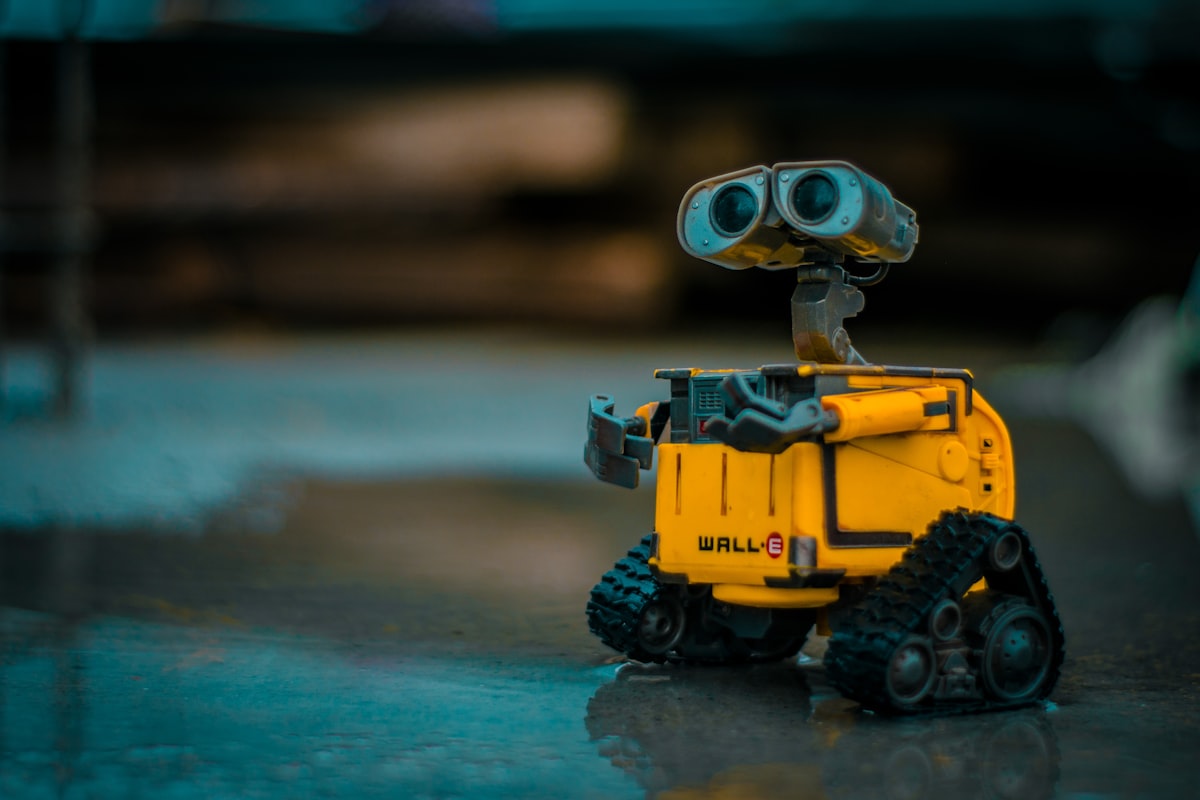
Real-time dynamic balance requires coupling high-frequency Whole-Body Control (WBC) with low-latency IMU state estimation.
Core Engineering Bottlenecks
Bipedal stability demands extreme burst torque for dynamic balance recovery alongside sustained holding torque during payload manipulation. Electromechanical actuators, planetary gearboxes, and strain-wave cycloidal drives generate substantial thermal waste heat. Operating under continuous stall-torque conditions quickly saturates motor windings, requiring active cooling architectures that penalize overall structural weight.
While computer vision guides gross arm kinematics to an object coordinate, the final millimeters of grasp stability depend on multi-axis tactile feedback. Current robotic end-effectors lack the dense spatial sensing arrays needed to measure surface shear forces, contact slip, and localized compliance in real time, causing grasping failures when handling deformable materials.
Training locomotion and manipulation policies via reinforcement learning in simulated physics environments (such as Isaac Gym or MuJoCo) relies on domain randomization to bridge the reality gap. In production, unmodeled variables—such as gearbox backlash, joint elasticity, and varying surface friction coefficients—trigger out-of-distribution policy collapses.
A humanoid robot actively balancing on two contact patches consumes significant baseline power simply to maintain an upright stance via Whole-Body Control (WBC) loops. Standard lithium-ion battery packs (typically 1.5 to 2.5 kWh) struggle to support continuous locomotion, heavy payload lifting, and onboard GPU tensor processing beyond two to four operational hours without scheduled docking cycles.
State of Active Production Pilots
Commercial deployments in automotive manufacturing and parcel logistics remain tightly bounded. Platforms like Figure 02 and Agility's Digit operate primarily within structured validation pilots: picking tote bins at fixed conveyor heights, transporting uniform totes across designated pathways, and returning to charging pads under localized supervisory monitoring.
These implementations operate as supervised task executors rather than autonomous general-purpose workers. Safety protocols enforce physical geo-fencing, and emergency stops trip automatically whenever internal state estimators diverge from anticipated kinematic envelopes.
Control Architecture: Decoupling Planning from Execution
Production humanoid systems split compute into hierarchical control layers. High-level semantic reasoning—identifying parts, determining pick sequences, and decoding natural language instructions—runs at 5 to 10 Hz via Vision-Language-Action (VLA) neural networks. Mid-level trajectory planning translates these targets into Cartesian end-effector paths at 50 to 100 Hz.
Crucially, the lowest layer runs real-time Whole-Body Control (WBC) and Model Predictive Control (MPC) at 500 to 1000 Hz. This low-latency loop computes motor drive currents to maintain Zero-Moment Point (ZMP) stability, ensuring the chassis counteracts external disturbances before balance is lost.
Factory deployment is governed strictly by MTBF (Mean Time Between Failures) and cost-per-pick metrics. An end-to-end policy that boasts 98% task success results in an unacceptable industrial error rate of two failures every one hundred cycles. Viability demands 99.99% operational repeatability before human intervention can be phased out.
Humanoid robotics is evolving from a classical mechanics and control theory challenge into an applied systems integration problem. Scaling these systems beyond supervised pilots requires pairing high-torque-density actuators with ruggedized tactile sensing and deterministic low-latency control architectures.
Key Takeaways
- Humanoid form factors prioritize brownfield facility compatibility over raw mechanical efficiency.
- Actuator thermal dissipation and continuous stall torque govern real-world operational cycles.
- Low-latency Model Predictive Control (500–1000 Hz) is required to sustain dynamic Zero-Moment Point balance.
- Industrial adoption depends on achieving 99.99% task repeatability, moving past probabilistic demonstration benchmarks.